

Colorever: Gem Art Puzzle
Oakever Games
I spent time with Colorever: Gem Art Puzzle as a casual puzzle game, and its biggest strength became clear very quickly: it is designed to remove pressure. Instead of asking me to beat a clock, protect a limited number of attempts, or react to fast-moving challenges, it lets me complete gem-style artwork at my own pace. That makes it a particularly comfortable choice for short breaks, quiet evenings, or anyone who finds conventional puzzle games more stressful than relaxing.
It comes from Oakever Games and sits in the puzzle category, with a free download and optional purchases priced at $5.99 per item. The game is rated for Everyone, which matches its approachable presentation and simple premise. Its store summary emphasizes relaxed artwork, and that description is a fair starting point, although the more useful question is whether that calm format will keep you interested after the novelty of the first pictures fades.
How Colorever feels during ordinary play
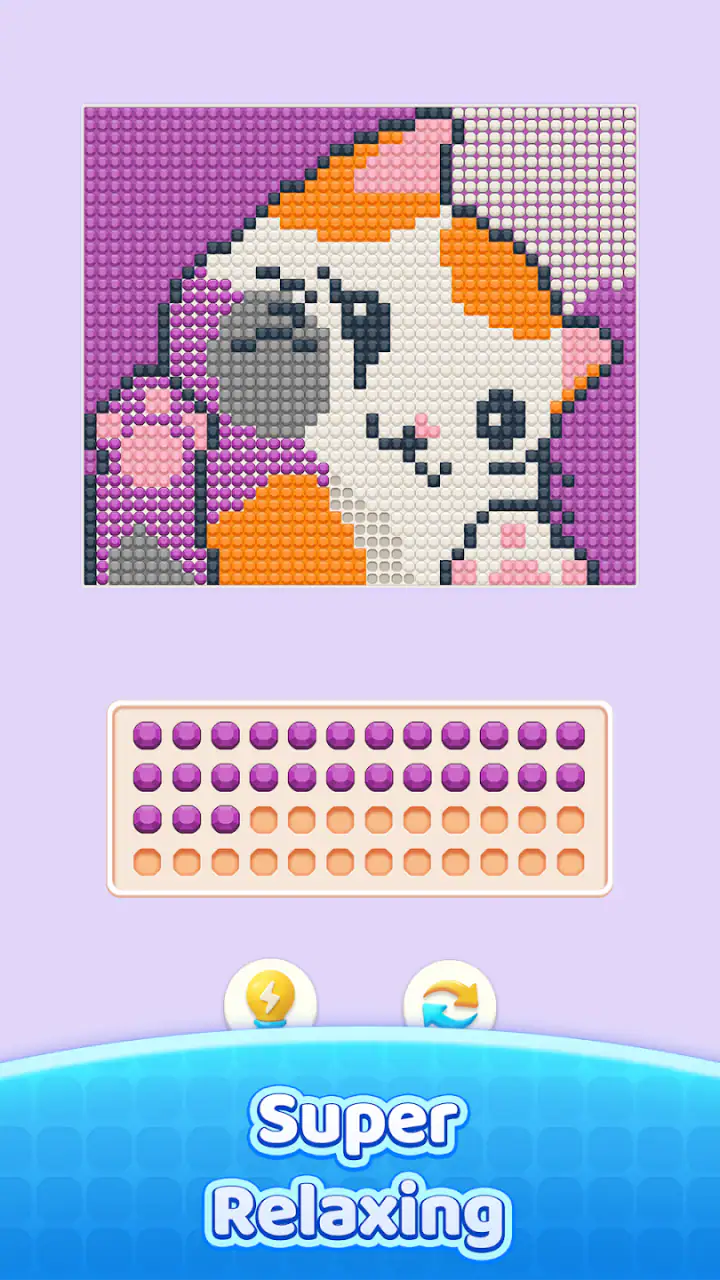
The basic rhythm is easy to understand. I choose an artwork, identify the matching gem or color area, and gradually fill the picture. Because there is no timer and no fail state, I never felt rushed into tapping before I was ready. That matters more than it may sound: the absence of punishment changes the game from a test of reflexes into a small, controlled activity that I can pick up and put down without losing momentum.
For a quick session, the game feels immediately accessible. I do not need to remember a complicated system or prepare for a difficult opening stage. The appeal is closer to digital coloring than to a competitive logic challenge, although the act of locating the next matching area still gives each picture a modest puzzle-like structure. If you enjoy visible progress and tidy completion, the gradual transformation from an unfinished image into a completed one is the main reward.
The lack of timers and failed attempts is not just a beginner-friendly detail; it defines the entire pace of the experience. I can pause when my attention drops and return later without feeling that I have wasted a turn. That makes it suitable for waiting rooms, commuting when I am seated, or winding down before bed. It is less suitable when I want tension, surprise, or a strong sense of mastery over increasingly demanding puzzles.
Related News






What the calm design does well
The gentle structure makes Colorever easy to recommend to people who normally avoid games. A family member who is comfortable with coloring books but not with action games should understand the objective without much explanation. The Everyone age rating also makes it a reasonable shared activity, though younger players may still need help with device controls or optional purchase decisions.
I also found the no-fail approach useful when my concentration was uneven. On a busy day, I could complete a small portion of an image, stop, and return without having to reconstruct a strategy. That is a practical advantage over many puzzle alternatives, where leaving midway can mean losing a streak, missing a limited opportunity, or returning to a difficult board with no clear starting point.
There is a subtle trade-off, however. Removing failure removes much of the friction that makes traditional puzzle games exciting. Colorever gives me a pleasant task, but it rarely makes me feel clever in the way a carefully solved logic grid or a difficult match puzzle can. I would choose it for decompression, not for a demanding mental workout.
Gallery
Speed expectations and the feel of a session
From a user perspective, the game feels built for steady interaction rather than rapid play. The artwork itself provides the sense of movement: each correct placement adds another small piece of progress. I would not approach it expecting a burst of action or a fast score-chasing loop. Its perceived speed comes from how quickly I can identify the next area and how satisfying the image looks as it fills, not from animated intensity.
This has an important consequence for phone choice. A powerful device is unlikely to transform the core experience into something fundamentally different, because the game’s appeal is deliberate and visual rather than performance-heavy. On an older compatible phone, the more relevant question is whether the screen remains comfortable for locating small areas and whether the operating system meets the requirement. The minimum supported OS is Android 7.1, so people using older hardware should check compatibility before planning around it.
My practical tip is to treat each picture as a sequence of short concentration blocks. Rather than trying to finish everything in one sitting, I work through the most obvious areas first, then leave the harder-to-spot sections for a moment when my eyes are less tired. This is more comfortable than repeatedly zooming or tapping around without a plan, especially on a smaller display.
What happens during longer or heavier use
Colorever is at its best when I use it in moderation. A brief session feels purposeful because the image changes noticeably. During a longer stretch, the repeated coloring routine can become predictable. That is not a defect for someone seeking a meditative activity, but it is a real limitation for players who need constant variation, escalating difficulty, or a stream of new mechanics.
Extended play also makes the screen size more important than raw processing power. Filling detailed artwork asks me to keep looking closely at the same display, so eye fatigue can arrive before the game itself feels demanding. I prefer using it with comfortable brightness and taking a break between pictures rather than treating it like a game meant for an uninterrupted marathon.
Another useful way to use it is as a transition activity. I might complete a few sections after finishing work, before opening a more absorbing game, or while listening to something that does not require visual attention from me. The low-pressure format works well in that role because I can stop instantly. It is not ideal as a background activity if I need to focus on a conversation or watch something else, since finding matching areas still requires visual attention.
When deciding whether to make an optional purchase, I would first ask whether the basic coloring loop already feels satisfying. A purchase cannot solve the central question of variety: if the repeated action itself is not enjoyable, adding more access will not change that. On the other hand, someone who already likes the artwork process may see a $5.99 item as a straightforward way to extend that particular hobby. I would make that decision slowly rather than buying immediately because the download is free.
Reliability and recovering from interruptions
The game’s no-fail structure gives it a welcome advantage when interruptions happen. If I need to put the phone down unexpectedly, there is no countdown pressuring me to return and no failed attempt hanging over the session. That makes recovery feel simple from a gameplay point of view: I can come back and continue the same kind of relaxed task instead of rebuilding a complicated plan.
This is especially helpful in everyday situations where attention is fragmented. Imagine waiting for an appointment while receiving occasional messages. A competitive puzzle may punish every interruption, but Colorever is naturally more forgiving because the design does not depend on maintaining a perfect streak. I can make progress in small pieces and stop when real life demands it.
The current version is 1.17.0, and the game has reached over 500K installs with a 4.7 average from around 5.2K ratings. Those figures suggest that the format has found a substantial audience, but they do not change the personal fit question. A popular relaxation game can still feel too repetitive for someone who wants challenge, and a simple title can be exactly right for someone who values predictability.
My main reliability-related reservation is not about difficulty but about expectations. This is a focused experience, so I would not install it expecting a broad collection of unrelated puzzle modes. Its dependable quality is the consistency of the coloring routine. That consistency is comforting when I want a familiar activity, but it can feel narrow if I am looking for a game that constantly surprises me.
Device constraints that matter more than specifications
The stated minimum operating system is Android 7.1, which gives the game a relatively accessible starting point for Android users with older phones. Still, compatibility is only one part of the decision. A device with a small screen may make detailed sections less comfortable to select, while a larger display can make the artwork easier to inspect and the overall process more relaxing.
I would also consider how the phone is normally used. If it is a shared family device, the Everyone rating and uncomplicated format are helpful. If it belongs to a child, I would pay attention to the presence of in-app purchases and make sure the purchasing setup is appropriate before handing it over. Free installation does not mean every part of the experience is free, so that distinction is worth keeping clear.
For people who are sensitive to demanding mobile games, Colorever’s design gives a reassuring impression because it does not present itself as a reflex-heavy title. Even so, I would avoid promising that it uses negligible resources on every phone; performance can vary with hardware, background activity, and the complexity of the artwork being displayed. The sensible approach is to try it on the intended device and judge whether the screen remains responsive and comfortable during a normal session.
A useful device habit is to clean the screen before playing. That sounds trivial, but this game depends on distinguishing small visual areas, and fingerprints or glare can make the task more irritating than it needs to be. On a compact phone, rotating the device or increasing text and display comfort settings may help, provided those changes do not make other apps inconvenient to use.
How it compares with familiar puzzle alternatives
Compared with match-three games, Colorever is much less energetic. Match-three titles usually reward quick pattern recognition, combos, and strategic planning under changing board conditions. Here, the satisfaction comes from completing artwork rather than chasing a high score. I would pick the match-three option when I want active decision-making, and Colorever when I want my hands occupied without feeling tested.
Compared with nonogram or logic-grid games, it is also gentler and less mentally demanding. Those alternatives can deliver a stronger sense of deduction because a wrong assumption affects the solution. Colorever is better for visual relaxation and easier for mixed-age play, but it will not replace a logic puzzle if the reason you play is to wrestle with a difficult problem.
It also differs from a traditional coloring app because the puzzle element gives me a clearer route through each image. I am not simply choosing any color I like; I am following a structured completion process. That can be satisfying for people who enjoy order and visible goals, although it offers less creative freedom than open-ended coloring.
The most important comparison is therefore about mood. If I want competition, deep strategy, or creative control, I would choose something else. If I want a guided, forgiving activity that turns a few spare minutes into visible progress, this game has a more convincing case.
Who should try it, and who should skip it
I would recommend it to casual players, families looking for a straightforward shared game, and adults who like coloring-style activities but want a little structure. It is also a good match for anyone who dislikes countdowns and limited attempts. The free entry point makes it easy to test the central loop before deciding whether optional content is worth paying for.
I would be more cautious about recommending it to experienced puzzle fans who measure value by difficulty. If you want increasingly complex deduction, competitive rankings, or a strong penalty for mistakes, the relaxed design may feel too soft. Likewise, players who become bored by repeated visual tasks should sample it briefly rather than assuming the calm presentation will remain engaging for long sessions.
One non-obvious strength is that it works well as a “reset” between demanding tasks. Because there is no fail pressure, I can use a short picture section to change mental gears without committing to a full game. One non-obvious weakness is the reverse side of that simplicity: when I am already relaxed and looking for stimulation, the same absence of pressure can make the experience feel passive.
My final performance verdict
Colorever: Gem Art Puzzle succeeds because it understands exactly what kind of game it wants to be. It is a calm visual puzzle from Oakever Games, free to start, suitable for Everyone, and supported on Android versions beginning with 7.1. The 164 reviews attached to its store presence add another visible sign of user interest, while the broad install base shows that the format is reaching plenty of phones. I would not treat those figures as a substitute for personal taste, but they fit my impression of a focused and approachable title.
In terms of perceived speed, it feels deliberately unhurried. In heavier use, the main concern is repetition and screen fatigue rather than demanding gameplay. For reliability, interruptions are easy to recover from because the design does not revolve around timers or failed attempts. For device constraints, screen comfort and compatibility matter more than chasing powerful hardware. Those are the practical points I would consider before installing it.
My recommendation is simple: choose it for peaceful, structured coloring sessions, not for a serious puzzle challenge. I like having a game that lets me make progress without pressure, and I can see myself returning to it when I want something quiet and visually satisfying. But I would skip it if my ideal puzzle game needs suspense, complex reasoning, or constant novelty. Its value comes from doing one modest thing well, and that is precisely why it will feel either pleasantly focused or too limited, depending on what you want from a mobile game.
FAQs for Colorever: Gem Art Puzzle
What is Colorever: Gem Art Puzzle?
Colorever: Gem Art Puzzle is a relaxing coloring game in which you complete colorful pictures by placing gems, crystals, or similarly shaped pieces in their matching positions. The gameplay is designed to be simple and accessible, making it suitable for short sessions or longer periods of casual play. Its main appeal is the combination of puzzle-solving, visual creativity, and satisfying finished artwork.
How do you play Colorever: Gem Art Puzzle?
To play, select an available artwork and follow the indicated colors, numbers, or symbols to identify where each gem belongs. Tap the correct areas to fill the image gradually, then continue until the entire design is complete. The controls are generally easy to understand, so new players can start quickly, while the increasing detail of later pictures provides a more engaging challenge.
Is Colorever: Gem Art Puzzle free to download and play?
Colorever: Gem Art Puzzle can generally be downloaded without an upfront purchase, allowing players to try the core coloring and puzzle experience for free. However, free mobile games may include advertising, optional purchases, or other limitations such as locked artwork, extra tools, or waiting periods. Check the current Google Play or App Store listing for the latest pricing and in-app purchase details.
Does Colorever: Gem Art Puzzle require an internet connection?
The basic puzzle experience may be available offline after the application and its required content have been installed, which can make it convenient for travel or areas with limited connectivity. Nevertheless, an internet connection may be needed for advertisements, updates, new artwork, cloud features, or purchases. Availability can vary by version and device, so test the game offline before relying on it without mobile data.
Is Colorever: Gem Art Puzzle suitable for children and casual players?
The straightforward matching mechanics and colorful artwork make Colorever: Gem Art Puzzle approachable for many casual players, including older children who can comfortably use a touchscreen. Parents should still review the age rating, advertising settings, and in-app purchase options before allowing independent play. Because the game may use small visual details and repetitive tapping, younger children may need supervision or assistance.
Pros
- Relaxing gem-by-number gameplay suitable for short sessions
- Bright artwork makes completed designs satisfying to view
- Simple controls are easy for beginners and casual players
- Large variety of pictures helps keep the experience fresh
- Works well as a calming activity away from competitive games
Cons
- Some designs may feel repetitive after extended play
- Small gems can be difficult to place on compact screens
- Progress may rely heavily on watching ads or optional purchases
- Limited challenge for players seeking strategic puzzle mechanics
- Requires patience
- as detailed pictures can take considerable time


